Surgical Instrument Supplier in Malaysia: Hospitals, clinics, surgical centres, and healthcare facilities depend on surgical instruments for a wide range of procedures. Choosing the right surgical instrument supplier in Malaysia is therefore an important procurement decision.
A supplier is not simply a source of products. Healthcare buyers also need to consider product specifications, manufacturing quality, documentation, regulatory requirements, availability, delivery, replacement options, and after-sales support.
Whether a facility needs individual forceps and scissors, complete surgical sets, specialty instruments, or other medical equipment, a structured purchasing process can help ensure that the products selected are appropriate for their intended use.
This guide explains what hospitals and clinics should consider when evaluating surgical instrument suppliers in Malaysia.
Why Choosing the Right Surgical Instrument Supplier Matters
Surgical instruments can differ considerably in design, size, construction, intended application, and handling characteristics.
A hospital may require instruments for several departments, while a specialist clinic may need only a smaller selection.
Common requirements can include:
- Surgical scissors
- Artery and hemostatic forceps
- Tissue forceps
- Dressing forceps
- Needle holders
- Retractors
- Scalpels
- Probes and directors
- Suture instruments
- Surgical sets
- Orthopaedic instruments
- ENT instruments
- Ophthalmic instruments
- Gynaecology instruments
Because requirements vary, hospitals should select a supplier based on their actual clinical and procurement needs rather than simply choosing the supplier with the largest catalogue or lowest price.
What Should Hospitals Look for in a Surgical Instrument Supplier?
There are several factors that healthcare procurement teams should evaluate when comparing suppliers.
1. Product Range
A supplier with a broad range of surgical instruments can simplify procurement when a hospital needs products for multiple departments.
Depending on the supplier, the range may include:
- Surgical scissors
- Artery and hemostatic forceps
- Tissue forceps
- Dressing forceps
- Needle holders
- Retractors
- Scalpels
- Probes and directors
- Suture instruments
- Surgical sets
- Orthopaedic instruments
- ENT instruments
- Ophthalmic instruments
- Gynaecology instruments
However, product range should not be considered an indication of product quality by itself.
The important question is whether the supplier can provide the specific instruments, sizes, configurations, and documentation required by the healthcare facility.


2. Instrument Quality and Manufacturing Consistency
Hospitals often purchase multiple instruments of the same type. Consistency is therefore an important consideration.
When evaluating surgical instruments, procurement teams may consider:
- Material specifications
- Construction quality
- Surface finish
- Jaw alignment
- Cutting performance where applicable
- Ratchet function
- Joint movement
- Handle design
- Instrument markings
- Packaging
- Product documentation
For instruments with moving components, such as scissors and forceps, proper operation is particularly important.
Healthcare facilities should establish their own inspection and acceptance procedures according to their clinical requirements and institutional protocols.
Quality should be evaluated using specific product information and documented requirements, rather than relying solely on general marketing descriptions.
3. Understanding Malaysian Medical Device Requirements
Regulatory requirements are an important consideration when purchasing medical devices in Malaysia.
The Medical Device Authority (MDA) Malaysia regulates medical devices under the Medical Device Act 2012 (Act 737).
MDA provides requirements relating to establishments involved in activities such as manufacturing, importing, distributing, and placing medical devices on the Malaysian market.
Healthcare procurement teams should therefore determine which regulatory requirements apply to the specific products and supplier involved.
The MDA also provides public databases and search facilities that can help users check relevant establishment and medical-device information.
Important: Regulatory requirements can depend on the nature and classification of the product. Hospitals should verify current requirements directly with MDA rather than relying on an unverified supplier statement.
4. Product Documentation
Documentation can be particularly important for hospitals, government facilities, and larger procurement projects.
Depending on the product and procurement requirements, buyers may need information such as:
- Product specifications
- Manufacturer details
- Product catalogue
- Instructions for use
- Material information
- Regulatory documentation
- Quality documentation
- Warranty information
- Cleaning instructions
- Maintenance information
- Sterilization instructions where applicable
- Traceability information where applicable
Before placing a large order, procurement teams should establish exactly what documentation is required by their organisation.
5. Surgical Instrument Material
Material is another factor to consider when purchasing surgical instruments.
Many reusable surgical instruments are manufactured using stainless steel or other materials selected for the intended application.
However, simply stating that an instrument is made from “stainless steel” is not enough to determine its overall quality.
Buyers should consider the manufacturer’s stated material specifications together with:
- Intended application
- Instrument construction
- Surface finish
- Corrosion resistance
- Cleaning requirements
- Sterilization requirements
- Manufacturer instructions
A procurement decision should therefore consider the complete product specification rather than one material description.
Common Surgical Instruments Used by Hospitals and Clinics
Hospitals and clinics may require a wide range of surgical instruments depending on their departments and procedures.
Surgical Scissors
Surgical scissors are designed for different cutting applications.
Examples include:
- Mayo scissors
- Metzenbaum scissors
- Operating scissors
- Stitch scissors
- Bandage scissors
The design and construction of a pair of scissors should correspond to its intended use.
For practical inspection guidance, see our article:
How to Inspect Surgical Scissors: 6 Key Points Every Healthcare Professional Should Check
Forceps
Forceps are among the most commonly used surgical instruments.
Different forceps are designed for different functions, including grasping tissue, handling materials, holding dressings, or controlling bleeding.
Common types include:
- Artery forceps
- Tissue forceps
- Dressing forceps
- Allis forceps
- Babcock forceps
- Mosquito forceps
Read our related guide:
Common Surgical Forceps: Types, Uses and Applications
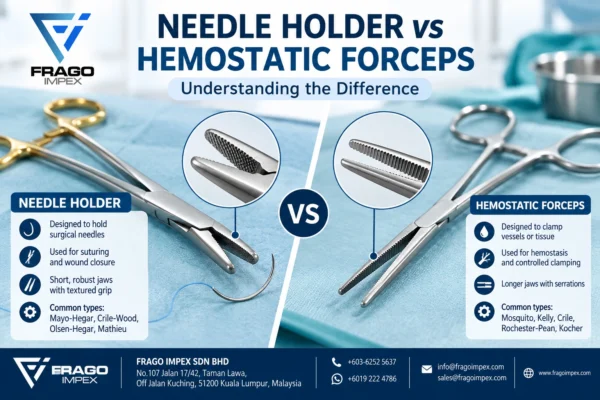
Needle Holders
Needle holders are designed to hold and control surgical needles during suturing.
Selection may depend on:
- Needle size
- Surgical procedure
- Jaw configuration
- Handle design
- Required control
- User preference
Hospitals should select needle holders according to the procedures and instruments used in their operating environment.
Retractors
Retractors are used to hold tissue or structures away from the operative field.
They can broadly be divided into:
- Handheld retractors
- Self-retaining retractors
The appropriate type depends on the surgical application and the requirements of the procedure.
Surgical Sets
Healthcare facilities may purchase instruments individually or as part of a surgical set.
A set can be useful when a standard group of instruments is required for a particular procedure or department.
However, hospitals should review the contents of each set carefully. Different facilities may have different requirements.
How to Compare Surgical Instrument Suppliers in Malaysia
A structured supplier comparison can help procurement teams make a more informed decision.
| Factor | What to Check |
|---|---|
| Product range | Does the supplier provide the required instrument categories? |
| Product specifications | Are sizes, patterns and specifications clearly stated? |
| Quality | Is product and manufacturing information available? |
| Regulatory requirements | Can applicable Malaysian requirements be verified? |
| Documentation | Can the required documents be supplied? |
| Availability | Are commonly required instruments available? |
| Replacement | Can individual replacement instruments be obtained? |
| Delivery | Can the supplier meet required delivery schedules? |
| Support | Can the supplier answer technical/product questions? |
| Pricing | Is the quotation clear and based on the correct specification? |
| After-sales | What support is available after purchase? |
This approach allows procurement teams to compare suppliers on meaningful criteria rather than price alone.
Price vs Quality: What Should Hospitals Prioritize?
Price is an important consideration in healthcare procurement, particularly when purchasing large quantities.
However, purchasing the lowest-priced instrument does not necessarily mean achieving the lowest overall cost.
Hospitals may also need to consider:
- Product service life
- Replacement requirements
- Availability of individual instruments
- Maintenance
- Cleaning and sterilization requirements
- Supplier support
- Future availability
- Consistency between replacement instruments
At the same time, a higher price does not automatically mean that a product is better.
The most appropriate approach is to compare verified specifications, intended use, quality, documentation, support, and overall procurement requirements.
Questions to Ask a Surgical Instrument Supplier
Before placing an order, hospitals and clinics can ask the supplier several practical questions.
Product Questions
- What is the exact instrument name?
- What sizes and patterns are available?
- What is the intended application?
- What material is used?
- Is the instrument available individually?
- Is it also available as part of a surgical set?
Regulatory Questions
- What regulatory requirements apply to the product?
- Who is the manufacturer?
- Who is responsible for importing or distributing the product where applicable?
- What regulatory documentation is available?
Procurement Questions
- What is the expected delivery time?
- Are replacement instruments available?
- Can surgical sets be configured according to requirements?
- What are the warranty terms?
- What after-sales support is available?
Maintenance Questions
- What cleaning instructions apply?
- What sterilization instructions apply?
- Are there specific maintenance requirements?
- What inspection points should healthcare staff consider?
Getting these answers before purchasing can help reduce procurement problems later.
Why Local Supplier Support Can Matter
For Malaysian healthcare facilities, local supplier support can simplify communication and procurement.
Depending on the supplier, local support may include:
- Product enquiries
- Quotations
- Product selection assistance
- Local delivery
- Replacement coordination
- Surgical-set requirements
- Product documentation
- After-sales communication
However, healthcare buyers should confirm exactly what support a supplier provides rather than assuming that all suppliers offer the same services.
For larger procurement projects, communication and response time can be particularly important.
FRAGO IMPEX as a Surgical Instrument Supplier in Malaysia
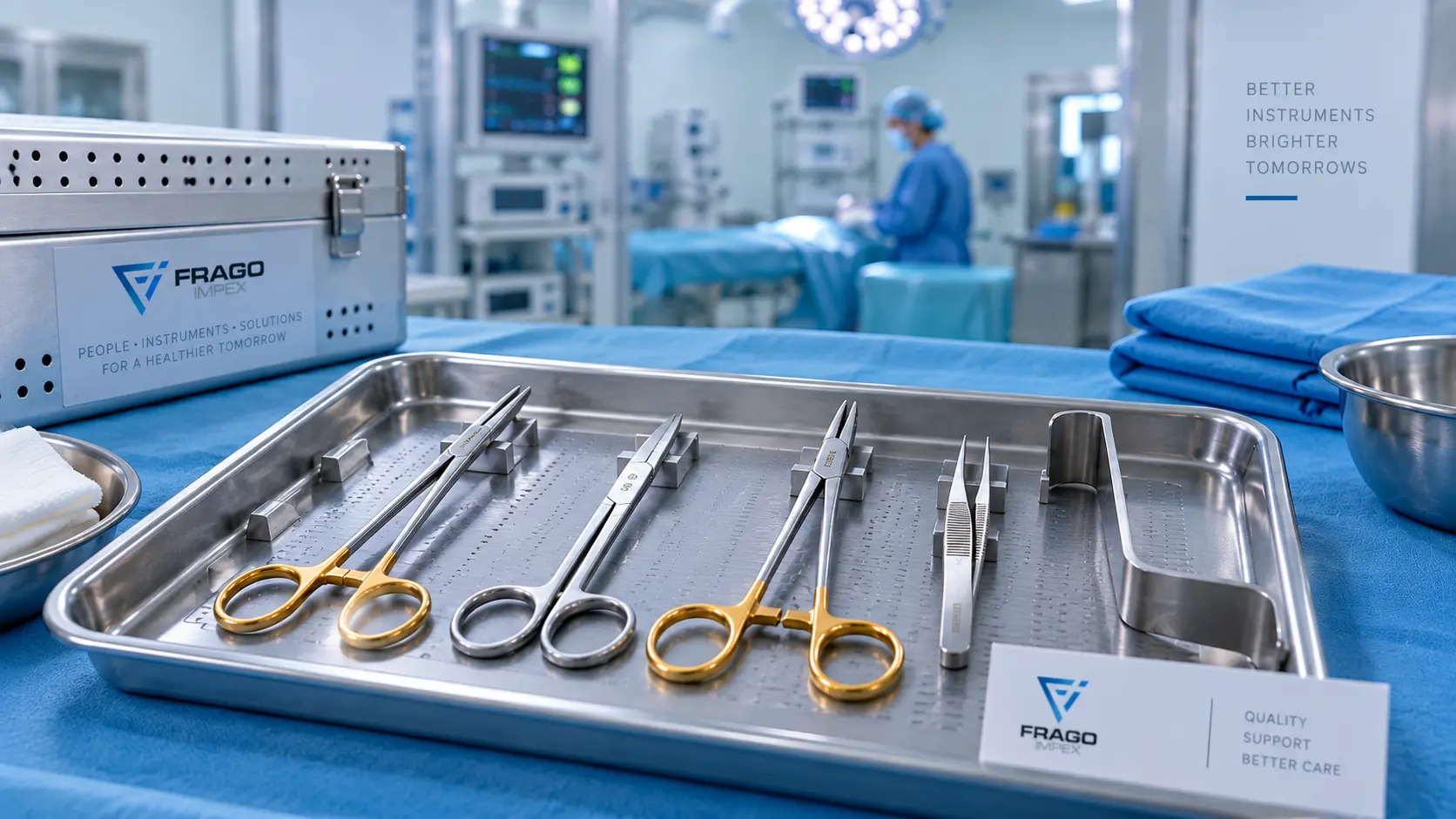
FRAGO IMPEX SDN BHD is a Malaysia-based supplier of surgical instruments, medical devices, hospital equipment, and related healthcare products.
The company provides a range of surgical instruments covering different categories and clinical applications.
The surgical instrument range includes products such as:
- Surgical scissors
- Artery forceps
- Needle holders
- Scalpels
- Retractors
- Suture instruments
- Surgical sets
- Gynaecology instruments
- Ophthalmic instruments
- ENT instruments
- Orthopaedic instruments
- Other specialist surgical instruments
You can explore the relevant product range through the FRAGO IMPEX surgical instruments category.
For hospitals and clinics that require multiple categories of surgical instruments, working with a supplier with a broad product portfolio can simplify product sourcing and communication.
The final product selection should always be based on the healthcare facility’s specific clinical, technical, procurement, and regulatory requirements.
How to Choose the Right Surgical Instrument Supplier for Your Facility
The right supplier depends on the individual requirements of the healthcare facility.
Before requesting quotations, procurement teams should define their requirements clearly.
1. Identify the Clinical Requirements
Determine which departments and procedures require instruments.
2. Prepare an Instrument List
Specify:
- Instrument type
- Size
- Pattern
- Quantity
- Required sets
- Specialty
3. Establish Documentation Requirements
Determine what documents must accompany the procurement process.
4. Confirm Regulatory Requirements
Check which Malaysian medical-device requirements apply to the products being purchased.
5. Compare Suppliers
Evaluate suppliers based on:
- Product specifications
- Quality
- Documentation
- Price
- Availability
- Delivery
- Support
- Replacement options
6. Review Samples Where Appropriate
For certain procurement projects, evaluating samples before committing to a larger order may help the healthcare facility assess suitability.
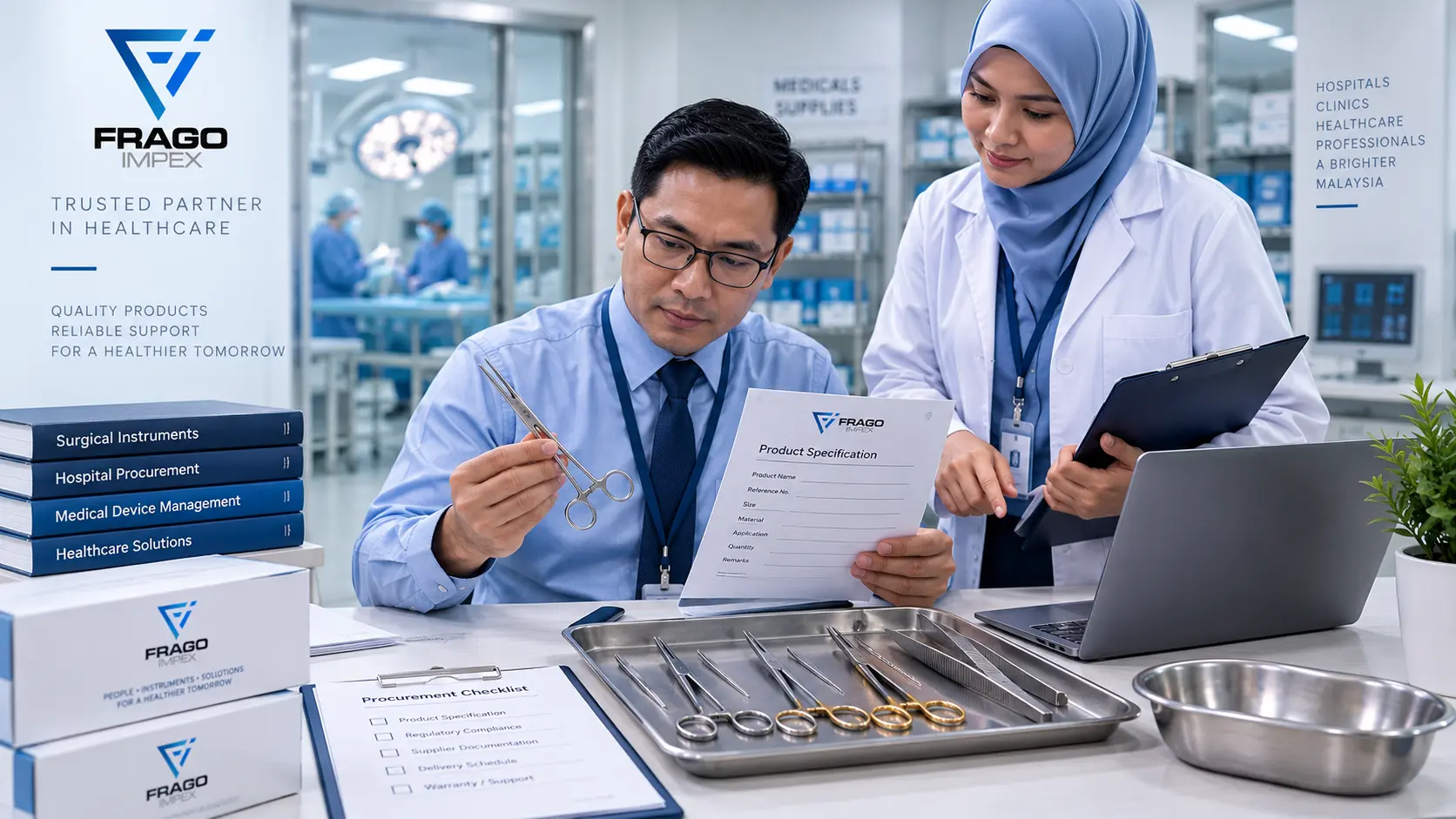
Surgical Instrument Procurement Checklist
Before finalising a purchase, procurement teams can use this checklist:
- Instrument type confirmed
- Size and pattern confirmed
- Intended application confirmed
- Quantity confirmed
- Manufacturer identified
- Product specifications reviewed
- Applicable regulatory requirements checked
- Required documentation received
- Supplier quotation reviewed
- Delivery schedule confirmed
- Warranty/support terms reviewed
- Cleaning instructions available
- Sterilization instructions available where applicable
- Replacement availability considered
For larger hospital procurement projects, this checklist should be adapted to the facility’s internal purchasing, clinical, quality, infection-control, and regulatory procedures.
Frequently Asked Questions
What should I look for in a surgical instrument supplier in Malaysia?
Look at product specifications, quality, product range, documentation, applicable regulatory requirements, availability, delivery, replacement options, customer support, and pricing.
What surgical instruments do hospitals commonly purchase?
Common categories include forceps, scissors, needle holders, retractors, scalpels, probes, suture instruments, surgical sets, and specialty instruments.
How can I check Malaysian medical-device regulatory information?
The Medical Device Authority Malaysia (MDA) provides information and online search facilities relating to medical devices and licensed establishments.
Healthcare buyers should use current MDA information when checking regulatory requirements.
Should hospitals buy individual instruments or complete surgical sets?
It depends on the facility’s requirements. Individual instruments can be useful for replacement or specific applications, while sets can be useful when a standard group of instruments is required.
What questions should I ask a surgical instrument supplier?
Ask about specifications, material, intended application, manufacturer, documentation, regulatory requirements, availability, delivery time, maintenance instructions, replacement options, and after-sales support.
Is the cheapest surgical instrument supplier the best option?
Not necessarily. Procurement teams should compare the complete value of the product, including quality, specifications, documentation, expected service life, replacement availability, support, and total purchasing requirements.
Conclusion
Choosing a surgical instrument supplier in Malaysia requires more than comparing prices or browsing a product catalogue.
Hospitals and clinics should consider the intended application, product specifications, manufacturing quality, documentation, applicable regulatory requirements, availability, delivery, replacement options, maintenance requirements, and supplier support.
A structured procurement process can help healthcare facilities select instruments that are appropriate for their clinical and operational requirements.
For hospitals, clinics, surgical centres, and healthcare procurement teams looking for surgical instruments and related medical equipment in Malaysia, FRAGO IMPEX SDN BHD offers a broad range of products for different healthcare applications.
Explore Surgical Instruments from FRAGO IMPEX
About FRAGO IMPEX
FRAGO IMPEX SDN BHD
No. 107, Jalan 17/42, Taman Lawa, Off Jalan Kuching
51200 Kuala Lumpur, Malaysia
Tel: +603-6252 5637
WhatsApp: +6019 222 4786
Email: info@fragoimpex.com
Sales: sales@fragoimpex.com
Website: https://fragoimpex.com