 Skip to content

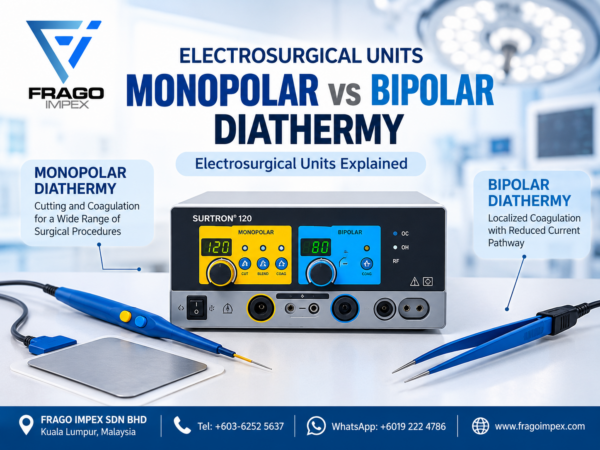
Electrosurgical equipment used for cutting and coagulating tissue during surgical procedures.
Electrosurgical Units Explained: Monopolar vs Bipolar Diathermy

Electrosurgical units (ESUs), commonly called diathermy machines in clinical settings, are widely used in operating theatres, surgical centres and outpatient procedure rooms. They use high-frequency electrical energy to produce controlled heating in tissue, allowing trained clinicians to cut tissue, coagulate blood vessels and manage bleeding during appropriate procedures.
Two common electrosurgical methods are monopolar diathermy and bipolar diathermy. Although both use electrical energy to produce a thermal effect, they differ in how the current travels through tissue, which accessories they require and how the energy is delivered to the surgical site.
Understanding these differences helps surgeons, operating theatre staff and hospital procurement teams select equipment that meets clinical requirements.
What Is an Electrosurgical Unit?
An electrosurgical unit is a medical device that generates high-frequency electrical energy and delivers it through a compatible electrode or instrument to produce a desired tissue effect.
Depending on the generator and its available modes, electrosurgery can be used for:
- Cutting: Producing an incision through controlled tissue heating.
- Coagulation: Applying thermal energy to help achieve haemostasis.
- Combined cut and coagulation: Producing an incision with a different degree of coagulation, depending on the selected waveform and device.
The resulting tissue effect depends on several factors, including the waveform, power setting, electrode design, activation time, tissue characteristics and contact technique. Selecting a mode does not guarantee a particular result; appropriate settings and technique remain essential.
An ESU system may include a generator, active electrode or handpiece, compatible cables, a foot switch where applicable, and other accessories specified by the manufacturer. Monopolar systems also require a patient return electrode.
For an example of this equipment, see the Surtron 120 Electrosurgical Unit available through FRAGO IMPEX.
1. What Is Monopolar Diathermy?


Monopolar diathermy uses an active electrode at the surgical site and a separate patient return electrode, commonly called a dispersive electrode or return pad.
The generator delivers high-frequency current through the active electrode. The current passes through the patient’s body to the return electrode and travels back to the generator, completing the circuit.
Although the active electrode concentrates the intended tissue effect at its tip, the current pathway extends through the patient. Correct equipment setup and return-electrode placement are therefore important safety considerations.
How monopolar diathermy works
- The electrosurgical generator produces high-frequency electrical energy.
- The surgeon applies the active electrode to the intended treatment area.
- The energy generates heat in the tissue, producing cutting or coagulation effects according to the selected mode and technique.
- Current returns through the patient’s return electrode to the generator.
Common applications of monopolar electrosurgery
Monopolar systems are used in a range of surgical specialties, depending on the procedure and compatible equipment. Applications may include:
- General surgery
- Dermatological procedures
- Gynaecological surgery
- Ear, nose and throat (ENT) procedures
- Plastic and reconstructive surgery
- Selected laparoscopic procedures
Advantages of monopolar diathermy
- Supports both cutting and coagulation when the generator provides the relevant modes.
- Offers a versatile approach for procedures requiring tissue incision and haemostasis.
- Can be used with different compatible electrode tips and handpieces.
- Is available in configurations suited to a range of surgical environments.
Limitations and considerations
Monopolar electrosurgery requires appropriate return-electrode management. Unintended thermal injury may occur because of incorrect pad placement, compromised electrode contact, damaged insulation, unintended current pathways or inappropriate activation.
The operating team must also consider surgical smoke, fire risks, nearby equipment and the presence of implanted electronic devices. These risks require established institutional procedures and manufacturer-specific precautions.
2. What Is Bipolar Diathermy?


Bipolar diathermy delivers electrical energy between two electrodes incorporated into the same instrument, commonly bipolar forceps.
One tip acts as the active electrode and the other as the return electrode. When the tips contact or grasp the target tissue, the current passes through the tissue between them and returns to the generator through the instrument.
Because the return electrode is incorporated into the instrument, conventional bipolar electrosurgery does not require a separate patient return pad. This arrangement confines the intended current pathway more closely to the tissue between the two electrodes, although thermal spread and other injuries remain possible.
How bipolar diathermy works
- The generator supplies electrical energy through a compatible bipolar instrument.
- The instrument’s two tips contact or grasp the intended tissue.
- Current passes between the tips, generating heat in the intervening tissue.
- The energy produces the intended tissue effect, commonly coagulation, depending on the device and its settings.
Common applications of bipolar electrosurgery
Bipolar instruments may be used in:
- Procedures requiring localized coagulation
- Selected neurosurgical procedures
- Gynaecological surgery
- ENT surgery
- Microsurgical applications
- Procedures in which the surgical team needs a localized current pathway
The appropriate application depends on the specific instrument, generator, procedure and tissue involved.
Advantages of bipolar diathermy
- Does not require a conventional monopolar return pad.
- Directs current between the instrument’s two electrodes.
- Can be useful when localized tissue coagulation is required.
- May be appropriate in procedures where the team wishes to avoid a monopolar current pathway through the patient.
Limitations and considerations
Bipolar instruments are designed for specific functions and may not offer the same cutting capability or versatility as a monopolar system. Some advanced bipolar devices can both seal and divide tissue, but their capabilities depend on the particular device.
Thermal spread, excessive activation, tissue sticking and instrument compatibility remain important considerations. Bipolar use should not automatically be assumed safe for every patient with an implanted electronic device; device-specific precautions and clinical assessment are still required.
3. Monopolar vs Bipolar Diathermy: Key Differences
The main difference between monopolar and bipolar diathermy is the electrical current pathway. This influences the accessories required, the way energy is delivered and the procedures for which each system may be suitable.
| Feature | Monopolar diathermy | Bipolar diathermy |
|---|---|---|
| Electrode arrangement | Separate active electrode and return electrode | Two electrodes incorporated into the instrument |
| Current pathway | Through the patient to the return electrode | Through tissue between the two instrument tips |
| Return pad | Required for conventional monopolar use | Not required for conventional bipolar use |
| Common instrument | Electrosurgical pencil or compatible active electrode | Bipolar forceps |
| Typical tissue effects | Cutting and coagulation, depending on mode | Commonly localized coagulation |
| Energy delivery | Active electrode at the surgical site | Between the instrument’s two electrodes |
| Clinical use | Versatile across many surgical procedures | Useful when localized energy delivery is required |
| Main safety consideration | Return-electrode placement and unintended current pathways | Tissue contact, thermal spread and appropriate activation |
These are general distinctions. Actual functions, modes and compatible accessories vary by device model.
4. Cutting vs Coagulation: Understanding Electrosurgical Modes
Choosing between monopolar and bipolar diathermy is only one part of electrosurgical planning. The selected mode also affects how electrical energy interacts with tissue.

Cut mode
Cut mode uses a waveform designed to produce rapid tissue heating and cellular disruption, enabling an incision when the electrode and technique are appropriate.
Coagulation mode
Coagulation modes produce thermal effects that can help achieve haemostasis. Depending on the generator and waveform, the effect may include cellular dehydration and protein denaturation.
Blend mode
Some generators provide blend modes that combine cutting with a degree of coagulation. The exact effect depends on the device’s waveform and settings.
Not every ESU provides the same selection of modes. Buyers should confirm the available functions against the intended procedures rather than assuming that every diathermy machine supports every operating mode.
5. How to Choose the Right Diathermy Machine for a Hospital or Clinic
Selecting an electrosurgical unit requires more than comparing output power or price. Hospitals and clinics should consider the procedures performed, the required tissue effects, accessory compatibility and the resources available for safe operation.
1. Identify the intended procedures
Begin by identifying the clinical specialties and procedures in which the unit will be used.
A clinic performing minor skin procedures may have different requirements from a hospital operating theatre performing complex general surgery. The chosen equipment should support the intended applications without paying for functions that are not required.
2. Determine whether monopolar, bipolar or both functions are needed
Consider the range of procedures performed by the facility.
- Monopolar-only equipment: May suit a facility whose clinical requirements are adequately covered by monopolar cutting and coagulation.
- Bipolar-only equipment: May suit selected applications requiring compatible bipolar instruments.
- Combined monopolar and bipolar equipment: May be appropriate where the surgical team needs both modalities.
The final decision should be based on the procedure mix, clinical assessment and the manufacturer’s stated intended use.
3. Check available operating modes and output
Review the available cut, coagulation, blend and bipolar functions, as applicable. Confirm that the generator’s output capabilities and operating modes meet the clinical team’s requirements.
Maximum wattage alone is not a reliable measure of suitability or clinical performance. Output ratings should be evaluated alongside the relevant load conditions, waveform characteristics and manufacturer specifications.
4. Verify accessory compatibility
Before purchasing, confirm compatibility for:
- Monopolar handpieces and electrode tips
- Patient return electrodes
- Bipolar forceps and connecting cables
- Foot switches and hand controls
- Adapters and other required accessories
The connector type, electrical ratings and approved accessory list should be checked against the specific generator model.
5. Assess safety features and service requirements
Review the manufacturer’s documentation for applicable safety features, including return-electrode monitoring, output monitoring and self-test functions.
Also consider equipment servicing, availability of compatible replacement accessories, user training and maintenance support.
6. Review documentation and regulatory requirements
Hospitals and distributors in Malaysia should verify the device’s applicable regulatory status and documentation before procurement. Where relevant, consult the Medical Device Authority Malaysia (MDA) for official regulatory information.
Do not assume that a product meets a particular certification or registration requirement without checking the relevant documents.
6. Electrosurgical Safety: Important Considerations
Electrosurgical units require appropriate training, setup and risk management. Both monopolar and bipolar systems can cause unintended thermal injuries if used incorrectly.

The following are general considerations for trained healthcare personnel. They do not replace the manufacturer’s instructions, institutional protocols or procedure-specific clinical guidance.
Before use
- Inspect the generator, cables, connectors and accessories for visible damage.
- Verify that all components are compatible with the specific unit.
- For monopolar use, select and apply the return electrode according to the manufacturer’s instructions.
- Confirm the intended mode and settings with the responsible surgical team.
- Assess patient-specific factors, including implanted electronic devices and other relevant risks.
During use
- Use the lowest effective settings appropriate for the intended tissue effect and clinical situation.
- Avoid unnecessary or prolonged activation.
- Keep the active electrode in a designated safe position when not in use.
- Follow applicable surgical smoke-control and operating-room fire-prevention procedures.
- Monitor the equipment for alarms, unexpected performance or signs of malfunction.
After use
- Deactivate the unit and disconnect accessories according to the manufacturer’s instructions.
- Inspect reusable instruments and cables for damage.
- Clean, reprocess and store reusable accessories according to their validated instructions.
- Remove malfunctioning equipment from clinical use in accordance with institutional procedures and arrange appropriate assessment.
Special consideration: Patients with implanted electronic devices
Patients with pacemakers, implantable cardioverter-defibrillators or other electronic implants may require additional assessment before electrosurgery.
The surgical and anaesthesia teams should follow applicable clinical guidance, consult the relevant device documentation and implement an appropriate risk-management plan. Bipolar electrosurgery may be considered in some situations, but it is not a universal substitute for patient-specific assessment.
7. Electrosurgical Units Available from FRAGO IMPEX
FRAGO IMPEX SDN BHD supplies surgical instruments, medical equipment and related products for healthcare facilities. The following listed products provide examples of different electrosurgical configurations.

Surtron 120 Electrosurgical Unit
A listed electrosurgical unit with monopolar and bipolar functions. Its product page describes five modes: Cut, Blend, Forced Coagulation, Soft Coagulation and Bipolar.
Consider this model when assessing requirements for a combined monopolar and bipolar system. Confirm the current configuration and documentation before ordering.

Surtron 50D Electrosurgical Unit
A listed monopolar electrosurgical unit with cutting and coagulation functions, described for minor surgical procedures.
Consider this model when evaluating equipment for applications that can be supported by its monopolar functions and specified output capabilities.
These products should be evaluated against the facility’s clinical needs, compatible accessories, current manufacturer documentation and applicable regulatory requirements. The product descriptions are not a substitute for the official instructions for use.
Frequently Asked Questions
1. What is the main difference between monopolar and bipolar diathermy?
Monopolar diathermy uses an active electrode at the surgical site and a separate patient return electrode. Bipolar diathermy uses two electrodes incorporated into the instrument, with current passing through the tissue between them.
2. Which is better: monopolar or bipolar diathermy?
Neither is universally better. Monopolar systems offer versatility for cutting and coagulation, while bipolar systems provide a localized current pathway and are commonly used for coagulation. The appropriate option depends on the procedure, instrument design, tissue and clinical requirements.
3. Does bipolar diathermy require a grounding pad?
Conventional bipolar electrosurgery does not require a separate patient return pad because both electrodes are incorporated into the instrument. Follow the specific equipment’s instructions for use.
4. Can bipolar diathermy cut tissue?
Conventional bipolar forceps are commonly used for coagulation. Certain advanced bipolar instruments also provide tissue-sealing and cutting functions. The available functions depend on the particular device.
5. What is the difference between diathermy and electrocautery?
In clinical conversation, these terms are sometimes used interchangeably. Technically, electrosurgery uses electrical current passing through tissue to generate heat, whereas electrocautery heats an instrument tip that transfers heat to tissue without electrical current passing through the tissue in the same way.
6. What should hospitals check before buying an electrosurgical unit?
Hospitals should assess intended applications, monopolar and bipolar capabilities, available modes, output specifications, accessory compatibility, safety features, servicing arrangements and relevant regulatory documentation.
7. Can monopolar diathermy be used in patients with a pacemaker?
It may be possible in selected circumstances, but it requires patient-specific assessment and an appropriate management plan. The surgical and anaesthesia teams should follow relevant clinical guidance and the implanted-device manufacturer’s recommendations.
Conclusion
Monopolar and bipolar diathermy are two important methods of delivering electrosurgical energy. Monopolar systems provide a versatile approach to cutting and coagulation, while bipolar systems direct current between two electrodes at the surgical site.
For healthcare facilities, the right choice depends on clinical applications, required functions, compatible accessories, safety procedures and manufacturer specifications.
FRAGO IMPEX SDN BHD provides access to electrosurgical equipment, including the Surtron 120 and Surtron 50D. Hospitals, clinics and medical-equipment buyers can review the listed products and contact the company to discuss their requirements.
Contact FRAGO IMPEX SDN BHD
- Website: www.fragoimpex.com
- Address: No. 107, Jalan 17/42, Taman Lawa, Off Jalan Kuching, 51200 Kuala Lumpur, Malaysia
- Telephone: +603-6252 5637
- WhatsApp: +6019 222 4786
- Email: info@fragoimpex.com
- Sales enquiries: sales@fragoimpex.com


