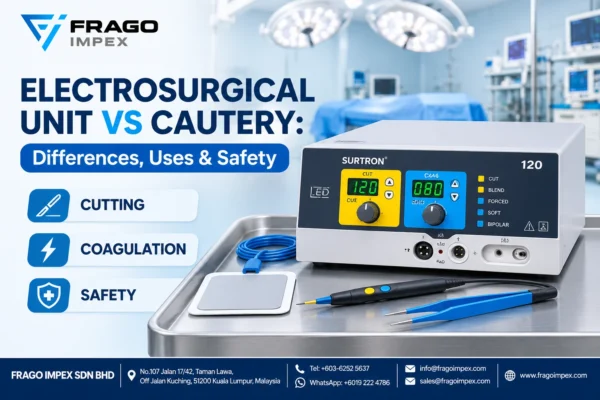
Electrosurgical equipment is commonly used in operating theatres, outpatient surgical departments and specialist clinics. These devices help surgeons cut tissue, coagulate blood and manage bleeding during selected procedures. However, the terms electrosurgical unit, electrosurgery, diathermy and cautery are often used interchangeably, even though they do not always refer to the same technology.
Understanding the difference between an electrosurgical unit (ESU) and true electrocautery helps hospitals, surgeons, operating theatre managers and procurement teams select appropriate equipment and accessories for their clinical requirements.
This guide explains how these technologies work, where they are used, how monopolar and bipolar systems differ, and what healthcare facilities should consider when purchasing and operating surgical energy equipment.
What Is an Electrosurgical Unit (ESU)?
An electrosurgical unit is a medical device that generates high-frequency electrical energy for surgical applications. Depending on the device and selected mode, this energy can produce tissue effects such as cutting, coagulation and desiccation.
Unlike a conventional electrical heating tool, an electrosurgical unit uses high-frequency alternating current to generate heat within or at the surface of the target tissue.
A typical ESU system may include:
- An electrosurgical generator.
- A handpiece and active electrode.
- A foot switch or hand-activation control, depending on the system.
- A patient return electrode for applicable monopolar systems.
- Bipolar forceps and compatible connecting cables, where supported.
- Other accessories specified by the equipment manufacturer.
The exact components depend on the system design and its intended applications.
Common uses of an electrosurgical unit
Electrosurgical units may be used for:
- Cutting or dissecting tissue during suitable surgical procedures.
- Coagulating tissue to help control bleeding.
- Desiccating tissue through controlled application of electrical energy.
- Performing selected dermatological procedures.
- Supporting certain gynaecological, ENT, general surgical and other specialist procedures.
Not every electrosurgical unit is suitable for every specialty. The available operating modes, output characteristics, accessories and intended use should be checked before selecting a device.
What Is Cautery?
Cautery is a broad term that can describe techniques used to destroy or seal tissue using heat or other energy. In everyday clinical language, cautery machine is also commonly used to describe an electrosurgical unit.
However, true electrocautery and electrosurgery work differently.
In true electrocautery, an electrically heated element transfers heat directly to the tissue. The electrical current used to heat the element does not pass through the patient’s tissue as part of the treatment circuit.
In electrosurgery, high-frequency electrical current passes through the tissue to produce the intended surgical effect.
This distinction is important when comparing equipment. A device marketed or described as a cautery machine may actually be an electrosurgical generator. Buyers should confirm the device’s technical description, intended purpose and operating principle rather than relying on the product name alone.
Common cautery-related technologies
Electrocautery or thermocautery: Uses a heated element to transfer heat directly to tissue. Certain portable devices use battery power to heat the working tip.
Electrosurgical cautery: A commonly used informal term for an ESU that uses high-frequency electrical current for tissue cutting or coagulation.
Monopolar diathermy: Uses an active electrode at the operative site, with the electrical circuit completed through a patient return electrode.
Bipolar diathermy: Passes current between two electrodes, typically the tips of bipolar forceps, through the tissue held between them.
For a clinical explanation of these differences, see the NCBI overview of electrosurgical units and their safe use.
Electrosurgical Unit vs Cautery: Key Differences
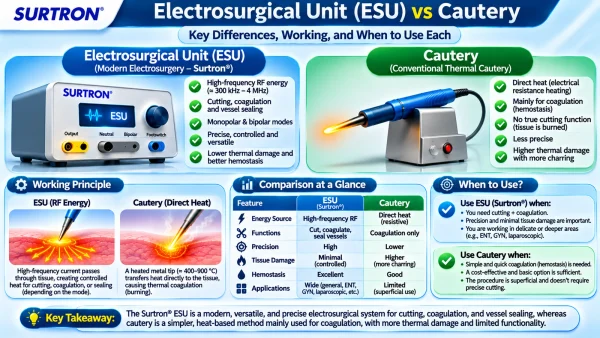
The main distinction is between an electrosurgical system that passes electrical current through tissue and a true electrocautery device that transfers heat from a heated element.
| Feature | Electrosurgical unit | True electrocautery |
|---|---|---|
| Operating principle | High-frequency electrical current produces tissue effects | An electrically heated element transfers heat to tissue |
| Current through patient tissue | Yes, as part of the electrosurgical circuit | No, not as part of the heating circuit |
| Common functions | Cutting, coagulation and other modes depending on the device | Direct thermal tissue treatment |
| Typical equipment | Generator, active electrode and compatible accessories | Heated tip or element and its power source |
| Accessories | May include handpieces, electrodes, return electrodes or bipolar forceps | Depends on the design of the cautery device |
| Power and control | Generator settings and operating modes vary by model | Temperature or heating control varies by device |
| Safety considerations | Electrical burns, unintended thermal injury, fire and accessory-related hazards | Thermal burns, unintended contact and fire hazards |
The exact functions and controls depend on the individual device. Not all systems provide every listed function.
How Does an Electrosurgical Unit Work?
An electrosurgical generator produces high-frequency electrical energy and delivers it through a compatible active electrode. When the energy interacts with tissue, it generates heat that can produce different effects according to the device settings, electrode design, contact technique and tissue characteristics.
1. Cutting
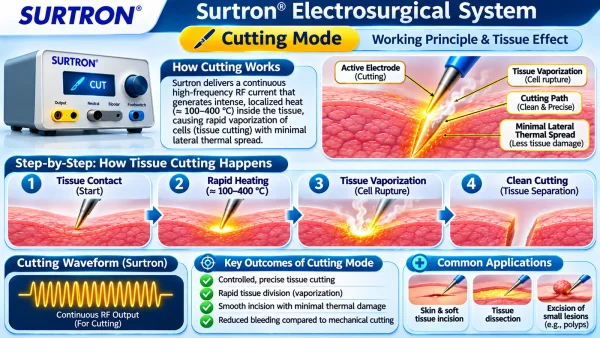
In an appropriate cutting mode, concentrated electrical energy produces rapid heating and tissue separation. The precise effect depends on the generator waveform, power setting, electrode and technique.
2. Coagulation
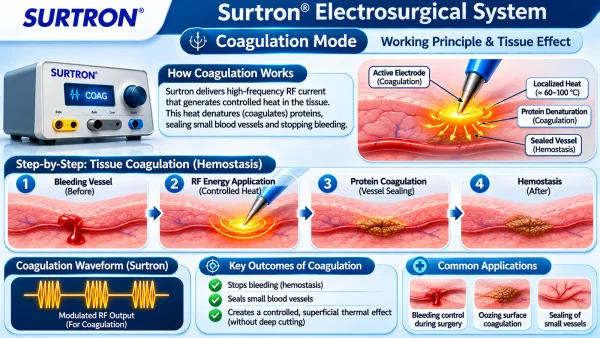
Coagulation modes are designed to produce tissue heating that helps control bleeding. Different generators may offer modes such as soft coagulation, forced coagulation or other manufacturer-specific settings.
3. Desiccation
Desiccation involves removing moisture from tissue through controlled heating. It can be produced using suitable electrosurgical techniques and settings.
These modes are not interchangeable in every situation. The operator must understand the specific generator and follow the instructions for use (IFU).
Monopolar vs Bipolar Diathermy
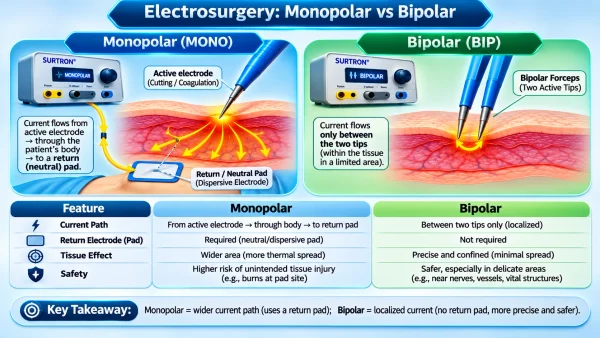
Electrosurgical units may support monopolar operation, bipolar operation or both. The appropriate configuration depends on the procedure, required tissue effect, accessories and clinical assessment.
Monopolar electrosurgery
In a monopolar system, current travels from the active electrode through the patient’s tissue and returns to the generator through a patient return electrode.
Typical considerations include:
- The active electrode is used at the surgical site.
- A compatible return electrode is required when specified by the system.
- Correct return-electrode placement and contact are important.
- The current path and potential for unintended thermal injury must be considered.
- The system may support cutting and coagulation modes, depending on the model.
Monopolar systems can be useful for a range of surgical applications, but they require careful attention to the electrical circuit and patient safety.
Bipolar electrosurgery
A bipolar system generally uses two electrodes, commonly the tips of bipolar forceps. Current passes through the tissue between these electrodes.
Typical considerations include:
- The working instrument incorporates both electrodes.
- A conventional monopolar patient return electrode is generally not required for bipolar operation.
- The current path is more localized between the electrodes.
- The instrument must be compatible with the generator and intended procedure.
Bipolar operation does not eliminate all risks. Excessive energy, prolonged activation, inappropriate contact or unsuitable technique can still cause thermal injury.
For a more detailed comparison, read FRAGO IMPEX’s guide to Monopolar vs Bipolar Diathermy.
Where Are Electrosurgical Units Used?
Electrosurgical equipment is used across a range of clinical specialties, provided the device is appropriate for the procedure.
General surgery
ESUs may be used for tissue dissection and coagulation during suitable open or minimally invasive procedures.
Gynaecology
Selected gynaecological procedures use electrosurgical equipment for tissue treatment or cutting. Device selection depends on the procedure, electrode type and intended application.
Dermatology
Certain electrosurgical devices are used for selected skin procedures. The required output, electrode configuration and mode depend on the intended clinical use.
Ear, nose and throat (ENT)
Electrosurgical equipment may be used in selected ENT procedures where the device and accessories are suitable for the operative site.
Minor procedure rooms and outpatient clinics
Compact electrosurgical generators may be considered for clinics performing procedures within the device’s intended scope.
Healthcare facilities should not assume that a generator suitable for one specialty is automatically suitable for another. Confirm the intended use, operating modes, compatible accessories and relevant clinical requirements before purchase.
How to Choose an Electrosurgical Unit for a Hospital or Clinic
Procurement teams should evaluate more than the maximum wattage or the number of modes listed in a product description.
1. Confirm the intended clinical applications
Identify the procedures and specialties the device will support. Consider whether the facility needs monopolar operation, bipolar operation or both.
2. Review the available operating modes
Check which cutting and coagulation modes are provided and whether they meet the requirements of the clinical team. Mode names and performance can vary between manufacturers.
3. Check output specifications
Review the rated output, available power settings and the loads at which output ratings are specified. A higher wattage does not automatically make a unit more appropriate for a particular procedure.
4. Verify accessory compatibility
Confirm compatibility for handpieces, electrodes, bipolar forceps, connecting cables, foot switches and return electrodes where applicable.
Check whether accessories are reusable or single-use, and whether the required replacement items will remain available.
5. Evaluate safety features
Depending on the system, relevant features may include return-electrode contact monitoring, alarms, output controls and self-check functions. Verify the exact features against the manufacturer’s documentation rather than assuming every ESU includes the same safeguards.
6. Consider installation and electrical requirements
Confirm the required power supply, operating environment, equipment placement and any installation conditions specified by the manufacturer.
7. Review training and after-sales support
Ensure that users can obtain appropriate training, operating instructions, maintenance support and compatible accessories.
8. Check documentation and regulatory requirements
Verify the model’s documentation, manufacturer details, intended purpose, applicable registration or authorization requirements and any relevant Malaysian Medical Device Authority (MDA) requirements.
Do not assume that a product meets a particular regulatory requirement solely because a seller describes it as certified or compliant. Check the applicable documentation and official records.
Safety Considerations When Using Electrosurgical Equipment
Electrosurgery carries risks that require established clinical procedures, trained operators and appropriate equipment management. Potential hazards include thermal injury, electrical burns, surgical fire and interference with implanted electronic devices.
1. Inspect the equipment before use
Check the generator, handpiece, cables, electrodes and connectors for visible damage. Confirm that accessories are compatible with the system and that required alarms and safety functions operate as specified.
Do not use equipment or accessories that are damaged or suspected to be faulty.
2. Use the correct patient return electrode
For monopolar systems that require a return electrode, follow the manufacturer’s instructions for electrode selection, placement and skin contact.
Assess the site and patient positioning before activation. Poor contact or an unsuitable current path can contribute to burns.
3. Use appropriate power settings
Use settings appropriate to the procedure, electrode and device instructions. The operator should understand how the selected mode affects tissue.
Do not increase output automatically when the expected effect is not achieved. First assess the electrode, connections, settings, tissue conditions and return-electrode contact where applicable.
4. Reduce surgical fire risks
Electrosurgical devices can act as ignition sources in the presence of an oxidizer and combustible material.
The surgical team should follow the facility’s fire-risk assessment and protocol. This includes appropriate management of alcohol-based skin preparations, allowing them to dry as directed, and coordinating the use of electrosurgery with oxygen delivery and other ignition or fuel sources.
5. Consider implanted electronic devices
Electrosurgery may interfere with pacemakers and other implanted electronic devices, depending on the device, surgical location, energy source and current path.
Identify relevant implants during preoperative assessment. The surgical, anaesthesia and appropriate device-management teams should determine the necessary precautions according to the patient’s circumstances and applicable guidance.
6. Manage surgical smoke
Electrosurgery can produce surgical smoke or plume. Use suitable smoke evacuation and other protective measures according to the procedure, facility policy and applicable guidance.
7. Store the active electrode safely
When the active electrode is not being used, place it in the appropriate insulated holder or holster specified for the system. Avoid unintended activation and contact with the patient or other combustible materials.
8. Maintain the equipment properly
Follow the manufacturer’s instructions for inspection, cleaning of reusable components, preventive maintenance and servicing. Do not attempt unauthorized repairs or use accessories outside the specified compatibility requirements.
For additional professional guidance, consult the International Federation of Perioperative Nurses’ electrosurgery safety guideline and the UK Government’s electrosurgery safety advice.
Electrosurgical Equipment Available from FRAGO IMPEX
FRAGO IMPEX SDN BHD supplies medical and surgical equipment for healthcare facilities in Malaysia and other markets.
Facilities reviewing electrosurgical equipment can explore the following website categories and product listings:
- Electro Surgical & Cautery Sets — browse the listed electrosurgical and cautery equipment.
- Surtron 120 Electrosurgical Unit — review the product listing and its stated features.
- Surtron 50D Electrosurgical Unit — review the listed specifications and available information.
Before placing an order, confirm the current model configuration, specifications, compatible accessories, availability, documentation and suitability for the intended clinical application with the supplier.
Frequently Asked Questions
Is an electrosurgical unit the same as a cautery machine?
Not necessarily. The term cautery machine is often used informally for an electrosurgical unit. True electrocautery transfers heat from a heated element, whereas electrosurgery uses high-frequency electrical current passing through tissue.
What is the main difference between electrosurgery and electrocautery?
Electrosurgery uses electrical current through tissue to generate the intended tissue effect. Electrocautery uses an electrically heated element that transfers heat directly to tissue without making the patient part of the heating circuit.
Can an electrosurgical unit cut and coagulate tissue?
Many ESUs provide cutting and coagulation functions, but available modes vary by model. Always confirm the device’s intended purpose, output specifications and operating instructions.
What is the difference between monopolar and bipolar diathermy?
Monopolar electrosurgery uses an active electrode at the operative site and a patient return electrode to complete the circuit. Bipolar electrosurgery generally passes current between two electrodes, such as bipolar forceps tips, through the tissue between them.
Is bipolar electrosurgery completely risk-free?
No. Bipolar systems have a different current path from monopolar systems, but thermal injury and other risks remain possible. Appropriate equipment selection, settings, technique and adherence to the manufacturer’s instructions are essential.
What should hospitals check before purchasing an ESU?
Hospitals should assess intended applications, operating modes, output specifications, compatible accessories, safety functions, electrical requirements, documentation, training, maintenance and after-sales support.
Does every electrosurgical unit require a patient return electrode?
No. A patient return electrode is generally required for monopolar operation, while conventional bipolar operation typically does not require one. Follow the instructions for the specific system.
Conclusion
Understanding the difference between an electrosurgical unit and true electrocautery helps healthcare facilities make more informed equipment decisions. Although the terms are sometimes used interchangeably, the technologies operate differently and may have different accessory and safety requirements.
When selecting surgical energy equipment, hospitals and clinics should prioritize clinical suitability, operating modes, accessory compatibility, safety features, documentation and ongoing support. Safe operation also depends on trained personnel, proper preparation and compliance with the manufacturer’s instructions and facility protocols.
FRAGO IMPEX provides a range of medical and surgical equipment, including listed electrosurgical and cautery products. Healthcare professionals and procurement teams can review the available listings and confirm their requirements before selecting a suitable system.
Contact FRAGO IMPEX SDN BHD
Website: https://www.fragoimpex.com
Address: No.107 Jalan 17/42, Taman Lawa, Off Jalan Kuching, 51200 Kuala Lumpur, Malaysia
Tel: +603-6252 5637
WhatsApp: +6019 222 4786
Email: info@fragoimpex.com
Sales: sales@fragoimpex.com
Medical information in this article is educational and does not replace professional training, the device manufacturer’s instructions for use or the healthcare facility’s approved clinical protocols.