Skip to content

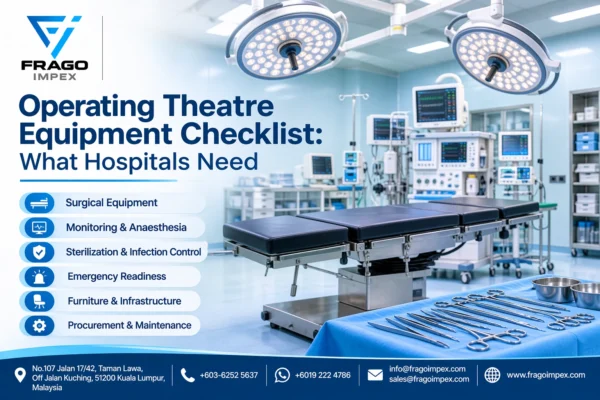
Operating Theatre Equipment Checklist: An operating theatre requires more than a surgical table and a set of instruments. Hospitals must coordinate surgical equipment, anaesthesia systems, patient monitoring, lighting, sterilization arrangements, infection prevention supplies and emergency equipment to support safe and efficient surgical care.
The exact equipment required depends on the procedures performed, the hospital’s specialty services, the design of the operating theatre and applicable healthcare requirements. A general surgery theatre, for example, may have different requirements from a theatre used for orthopaedic, cardiac or neurosurgical procedures.
This guide provides a practical operating theatre equipment checklist for hospital administrators, operating theatre managers, surgeons, nurses, biomedical engineers and medical procurement teams. It covers essential equipment categories, purchasing considerations, maintenance and common procurement mistakes.
1. Operating Table

The operating table supports patient positioning and access to the surgical site. Its design should match the procedures performed and the positioning requirements of the clinical team.
When selecting an operating table, consider:
- Height adjustment and positioning functions.
- Safe working load and stability.
- Compatibility with required accessories and positioning supports.
- Ease of cleaning and disinfection.
- Access for the surgical team and imaging equipment where needed.
- Availability of service and replacement parts.
General surgery, orthopaedics, urology and gynaecology may require different positioning capabilities or accessories. Confirm the intended use before selecting a model.
Explore the FRAGO IMPEX electric operating table and the operating theatre tables and lights category.
2. Operating Theatre Lights

Surgical lighting provides illumination of the operative field. The light should help the surgical team see tissue clearly while minimizing unwanted shadows and glare.
Important selection factors include:
- Illumination suitable for the intended procedures.
- Adjustable positioning and stable movement.
- Appropriate colour rendering and colour temperature.
- Ease of cleaning and maintenance.
- Ceiling-mounted or mobile configuration according to the room layout.
- Compatibility with other equipment and adequate ceiling clearance.
Hospitals should assess the complete lighting arrangement rather than comparing illuminance specifications alone.
FRAGO IMPEX lists a Shadowless Operating Lamp 500LED. Review the model’s specifications against the requirements of the intended theatre.
3. Anaesthesia Machine and Airway Management Equipment
Anaesthesia equipment supports the delivery and monitoring of anaesthesia according to the procedure and patient’s needs. Selection and configuration must be determined by qualified anaesthesia professionals.
Depending on the intended clinical services, the equipment list may include:
- Anaesthesia workstation or an appropriate anaesthesia delivery system.
- Ventilator and breathing system.
- Oxygen supply and other required medical gas connections.
- Gas and agent monitoring where applicable.
- Airway management equipment, including laryngoscopes, masks and compatible airway devices.
- Manual ventilation equipment.
- Suction and related accessories.
- Backup arrangements for equipment or supply failure.
Before procurement, confirm the available medical gases, electrical supply, alarms, ventilation requirements, monitoring compatibility and service support. The team must also have an appropriate plan for airway emergencies.
The World Health Organization’s Guidelines for Safe Surgery provide guidance on anaesthesia equipment and essential resources, with requirements varying according to the level of care and facility context. WHO Guidelines for Safe Surgery 2009+1
4. Patient Monitoring Equipment

Patient monitoring equipment allows clinical staff to observe relevant physiological parameters during surgery and anaesthesia.
Depending on the procedure and the anaesthesia plan, equipment may include:
- Multiparameter patient monitor.
- Electrocardiography (ECG).
- Pulse oximetry.
- Non-invasive blood pressure monitoring.
- Temperature monitoring.
- Capnography and other respiratory monitoring where indicated.
- Invasive pressure monitoring for procedures requiring it.
Confirm that the monitor supports the parameters needed for the planned procedures and that appropriate sensors, probes, cables and accessories are available.
Equipment selection should be based on clinical requirements, not merely the number of parameters shown on a display. Monitoring must be used by trained staff according to the applicable clinical standards and institutional protocols.
5. Surgical Instruments and Instrument Sets

Surgical instruments should be selected according to the procedures performed and the techniques used by the surgical team.
A general inventory may include:
- Cutting instruments, such as surgical scissors and suitable scalpel handles.
- Grasping and holding instruments, including tissue forceps.
- Haemostatic forceps.
- Needle holders.
- Retractors.
- Suction instruments and accessories.
- Procedure-specific instrument sets.
- Trays and compatible sterilization containers.
Specialties such as orthopaedics, ophthalmology, ENT, thoracic surgery and gynaecology may require additional instruments and dedicated sets.
When purchasing, verify the exact instrument pattern, size, material, function, manufacturer instructions and compatibility with the intended reprocessing method.
See the FRAGO IMPEX surgical instruments collection for available instrument categories, including surgical sets where available on the website.
6. Electrosurgical Unit and Cautery Equipment

Electrosurgical equipment is used in suitable procedures for cutting tissue or coagulation, according to the device’s design and intended purpose.
The procurement list may include:
- Electrosurgical generator.
- Compatible monopolar and/or bipolar accessories.
- Handpieces and electrodes appropriate for the intended procedures.
- Patient return electrodes where required by the system.
- Foot switches and connecting cables.
- Compatible single-use or reusable accessories as specified by the manufacturer.
Check the available operating modes, power requirements, accessory compatibility, alarms and maintenance arrangements. Staff training and adherence to the manufacturer’s instructions are important for safe use.
Review the FRAGO IMPEX electrosurgical cautery equipment category.
7. Suction Equipment

Suction equipment removes fluids and other material from the operative field when required. The appropriate configuration depends on the procedure, the expected workload and the available central suction system.
Assess:
- Required suction performance for the intended use.
- Compatibility with the available power supply or central vacuum system.
- Collection canisters, tubing, filters and accessories.
- Overflow protection and alarms where applicable.
- Cleaning and disinfection requirements.
- Availability of backup equipment and replacement consumables.
If the theatre uses a central medical vacuum system, confirm that the outlets, connections and capacity meet the facility’s requirements. Portable suction may be needed for specific applications or backup arrangements.
8. Sterilization and Instrument Reprocessing Equipment

Hospitals need a reliable process for reprocessing reusable surgical instruments. This may involve a central sterile services department (CSSD) or another appropriately organized and validated reprocessing arrangement.
Equipment and supplies may include:
- Autoclaves suitable for the intended instrument loads.
- Instrument trays, containers and compatible packaging.
- Cleaning equipment appropriate for the instruments.
- Inspection and preparation workstations.
- Drying and storage arrangements.
- Chemical and biological monitoring supplies, as applicable.
- Water treatment or other utilities where specified by the equipment manufacturer.
The appropriate configuration depends on the hospital’s workload, instruments, packaging, sterilization method and validated procedures. Not every item can be processed in the same sterilizer.
FRAGO IMPEX offers autoclave sterilizers and a range of surgical instruments.
For more detailed guidance, read Surgical Instrument Sterilization: Methods, Steps and Common Mistakes.
The CDC’s Recommendations for Disinfection and Sterilization in Healthcare Facilities provide additional guidance on appropriate reprocessing practices. Frago Impex+1
9. Emergency and Resuscitation Equipment

Operating theatres must have appropriate emergency equipment available for the clinical services provided. The exact arrangement should be defined by the hospital’s emergency protocols and applicable requirements.
The equipment inventory may include:
- Defibrillator appropriate for the facility’s clinical needs.
- Manual resuscitation bag and compatible masks.
- Emergency airway management equipment.
- Emergency suction arrangements.
- Oxygen delivery equipment and required accessories.
- Emergency trolley with organized supplies.
- Emergency medicines and consumables managed under institutional policy.
Staff should know where emergency equipment is located and how to access it. Equipment readiness checks, battery checks, expiry-date reviews and replenishment procedures should be assigned to designated personnel.
The WHO’s Surgical Safety Checklist includes checks for anaesthesia equipment, pulse oximetry, airway risks and anticipated blood loss. Hospitals should adapt the checklist to their local procedures rather than treating it as a complete equipment inventory. World Health Organization+1
10. Operating Theatre Furniture and Supporting Equipment

Supporting furniture helps organize instruments, supplies and staff workspaces. Select items that fit the room layout and can be cleaned according to the facility’s infection prevention procedures.
Depending on the theatre’s design, consider:
- Instrument trolleys and Mayo stands.
- Stainless steel instrument tables.
- Surgeon and assistant stools.
- Kick buckets and appropriate waste containers.
- IV stands and compatible infusion accessories.
- Storage cabinets for approved supplies.
- Patient transfer trolley or stretcher.
- Suitable positioning accessories and supports.
The material, dimensions, mobility and load capacity should be appropriate for the intended use. Check that furniture does not obstruct access to the patient, emergency equipment, medical gas outlets or staff circulation routes.
See FRAGO IMPEX hospital furniture for available furniture categories.
11. Medical Gas, Electrical Supply and Environmental Systems
Medical equipment cannot function reliably without suitable supporting infrastructure. This is an important consideration when planning a new operating theatre or renovating an existing one.
Assess the following with the hospital’s engineering team and relevant qualified professionals:
- Medical oxygen and other required medical gas supplies.
- Medical gas outlets, connections and identification.
- Medical vacuum and suction infrastructure.
- Electrical outlets and circuit capacity.
- Backup power arrangements for designated critical equipment.
- Earthing, electrical safety and equipment compatibility.
- Ventilation, air conditioning and environmental controls.
- Lighting, emergency lighting and suitable room layout.
- Data connections and equipment integration where required.
Requirements depend on the facility’s design, procedures and applicable local standards. Medical gas systems, electrical installations and theatre ventilation should be assessed by appropriately qualified professionals rather than specified solely from a general equipment checklist.
12. Surgical Consumables and Accessories
Capital equipment is only part of the procurement plan. The hospital also needs a supply process for consumables and accessories that are compatible with the equipment and procedures.
Typical categories include:
- Surgical gloves, gowns and drapes.
- Masks and other required personal protective equipment.
- Sutures and compatible needle types.
- Sterile dressings, gauze and swabs.
- Syringes, needles and IV administration supplies.
- Electrosurgical accessories.
- Suction tubing and collection supplies.
- Sterilization packaging and indicators.
- Monitor probes, electrodes and other compatible accessories.
Quantities should be based on expected procedure volume, shelf life, storage conditions, supplier lead times and the hospital’s stock-management policy.
Avoid purchasing accessories based only on appearance or general product descriptions. Confirm device compatibility, intended use and any applicable sterility or single-use requirements.
FRAGO IMPEX also supplies surgical sutures and surgical instruments.
Complete Operating Theatre Equipment Checklist
Use the following checklist as a starting point for procurement planning. It is not a universal regulatory minimum; the final inventory must be approved against the hospital’s clinical services, engineering design and applicable requirements.
OT Procurement Checklist
0 / 30 checked1. Surgical Equipment
2. Anaesthesia and Patient Monitoring
3. Sterilization and Infection Prevention
4. Emergency Readiness
5. Furniture and Infrastructure
6. Procurement and Maintenance
How to Select Operating Theatre Equipment for a Hospital
1. Define the procedures and specialty services
Start with the procedures the theatre will support. General surgery, orthopaedics, obstetrics and gynaecology, ophthalmology and other specialties can have different equipment requirements.
Ask the surgeons, anaesthesia team, theatre nurses and biomedical engineering staff to agree on the intended equipment list.
2. Assess capacity and workflow
Estimate procedure volume, operating hours, room utilization and instrument turnaround time. Consider whether the hospital needs equipment for simultaneous procedures and whether sufficient backup equipment is available.
3. Verify technical specifications
Compare the required functions, dimensions, load capacity, power requirements, accessories and operating environment with the manufacturer’s documentation.
Avoid choosing equipment solely because it has more features or a lower purchase price.
4. Check regulatory and documentation requirements
For hospitals in Malaysia, confirm the applicable medical device registration, establishment licensing and other requirements with the Medical Device Authority Malaysia.
Request relevant product documentation, operating instructions, warranty information and service arrangements before approving procurement.
5. Plan installation and staff training
Some equipment requires dedicated utilities, structural support, specialist installation or integration with other systems. Confirm these requirements before delivery.
Ensure the relevant staff receive training and that installation and acceptance checks are documented before clinical use.
6. Establish maintenance and lifecycle costs
The total cost of ownership includes more than the initial purchase. Consider installation, training, preventive maintenance, replacement parts, consumables, technical support and eventual equipment replacement.
The WHO’s Medical Equipment Maintenance Programme Overview explains the importance of performance inspections, safety inspections and preventive maintenance. World Health Organization+1
Common Mistakes When Planning an Operating Theatre
- Purchasing equipment before confirming the procedures and specialty requirements.
- Selecting an operating table or light without checking room dimensions and positioning needs.
- Overlooking compatible accessories and consumables.
- Failing to coordinate anaesthesia equipment with medical gas and electrical infrastructure.
- Assuming that a sterilizer’s chamber capacity guarantees compatibility with every instrument load.
- Neglecting maintenance, staff training and technical support.
- Omitting emergency readiness and backup arrangements from procurement planning.
- Treating a general checklist as proof of regulatory compliance.
A coordinated procurement process reduces avoidable omissions and helps the hospital plan its budget, installation and operating procedures more effectively.
Frequently Asked Questions
What equipment is essential in an operating theatre?
Common core categories include an operating table, surgical lights, appropriate surgical instruments, anaesthesia equipment, patient monitoring, suction, emergency equipment, sterilization arrangements and supporting furniture. The precise requirements depend on the procedures performed and applicable standards.
What is the difference between OT equipment and surgical instruments?
Operating theatre equipment includes larger systems and devices such as operating tables, surgical lights, anaesthesia machines and patient monitors. Surgical instruments are the tools used directly during procedures, such as scissors, forceps, needle holders and retractors.
Does every operating theatre need an autoclave?
Not necessarily inside the operating room itself. The hospital needs an appropriate validated reprocessing arrangement for reusable instruments, which may be provided through a central sterile services department or another suitable facility arrangement.
What should hospitals check before purchasing an operating table?
Review positioning functions, safe working load, stability, accessories, compatibility with the intended procedures, room dimensions, cleaning requirements, installation and service support.
How often should operating theatre equipment be maintained?
Maintenance schedules depend on the equipment, manufacturer’s instructions, risk assessment and applicable requirements. Hospitals should establish documented inspection and preventive maintenance programmes and respond promptly to identified faults.
How can hospitals avoid overspending on operating theatre equipment?
Prepare a procedure-based equipment list, obtain input from clinical and engineering teams, compare complete specifications and lifecycle costs, and confirm accessory requirements before ordering. Prioritize equipment that meets actual clinical needs rather than buying features that may not be used.
Conclusion
A well-planned operating theatre depends on the right combination of surgical equipment, anaesthesia and monitoring systems, instruments, sterilization arrangements, emergency resources and supporting infrastructure.
Hospitals should develop their operating theatre equipment checklist around the procedures they intend to perform, the requirements of their clinical teams and the facility’s technical capabilities. Regulatory verification, installation planning, staff training and preventive maintenance should all be included in the procurement process.
FRAGO IMPEX SDN BHD supplies surgical instruments and medical equipment for healthcare facilities. Explore the company’s operating theatre tables and lights, surgical instruments and autoclaves to review available product categories.
Contact FRAGO IMPEX SDN BHD
- Address: No. 107, Jalan 17/42, Taman Lawa, Off Jalan Kuching, 51200 Kuala Lumpur, Malaysia
- Telephone: +603-6252 5637
- WhatsApp: +6019 222 4786
- Email: info@fragoimpex.com
- Sales: sales@fragoimpex.com
- Website: www.fragoimpex.com